
The Development of Early da Vinci Instrument Tips
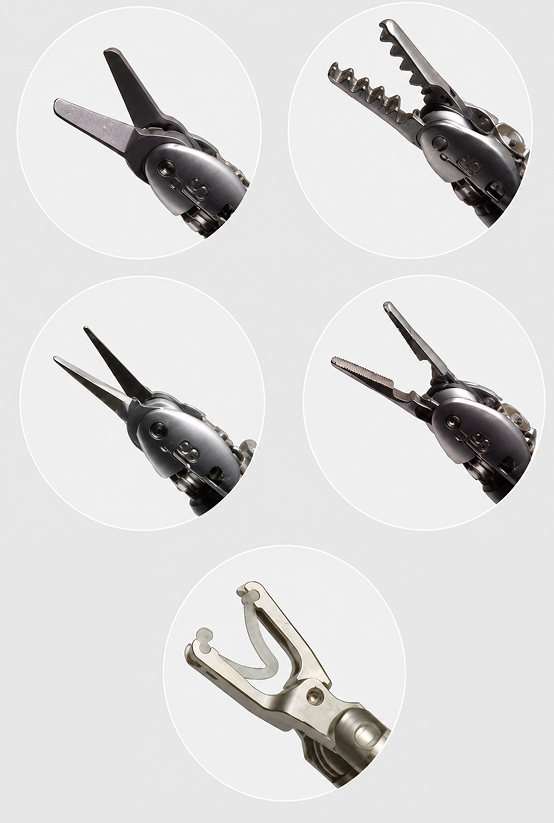
Between 1997 and 2001, Chris Julian played a key role in the development of numerous robotic instrument tips that would become part of the expanding da Vinci surgical platform, including:
- DeBakey forceps
- Potts arterial scissors
- Round-tip scissors
- WECK Hem-o-lok clip applier instruments
- Mitral valve carrier and valve forceps
- Numerous supporting instrument architectures and prototypes
At the time, the challenge extended far beyond simply creating robotic functionality.Surgeons had spent decades developing deep trust and familiarity with traditional surgical instruments. Many owned personal sets of instruments that had been refined over generations of surgical practice. These tools were elegant, balanced, highly polished, and crafted specifically for delicate interaction with human tissue.The earliest robotic instruments, while technologically revolutionary, often appeared mechanical, industrial, and unfamiliar.
For robotic surgery to gain acceptance, the instruments needed to do more than function.
They needed to look, feel, and perform like instruments surgeons could trust.
Chris became heavily involved in bridging this gap between robotic engineering and surgical craftsmanship.
Working closely with surgeons, manufacturing teams, and specialized suppliers, he helped refine the geometry, surface finishes, atraumatic features, cleaning characteristics, and overall appearance of many early instrument designs.
The goal was to transform robotic end effectors from mechanical assemblies into surgical instruments worthy of the operating room.
A significant portion of this effort involved collaboration with Working closely with surgeons, manufacturing teams, and Manufacturing in St. Louis, one of the few organizations possessing the craftsmanship required to finish miniature surgical components at the level surgeons expected.
Components that began as precision-machined parts were hand-ground, polished, fitted, and refined through extensive iteration until they achieved the appearance and tactile qualities required for clinical acceptance.
This work helped establish the visual and functional language that still defines robotic surgical instruments today.
As production volumes increased, Chris also participated in the transition from machined instrument components to advanced metal injection molding (MIM) technologies.
The successful migration of these intricate surgical components into scalable manufacturing processes became a critical step in allowing robotic surgery to grow from a promising technology into a commercial reality.
More than twenty-five years later, many of the fundamental forms, functions, and design philosophies established during those early developments remain visible in modern robotic surgical instruments.
Chris’s contribution was not simply designing instrument tips.
It was helping transform robotic surgery from an engineering experiment into a surgical tool that clinicians could trust.
Ridge Medical Innovation, LLC
Chris Julian
Experience spanning surgical robotics, implantable devices, manufacturing systems, and advanced medical technologies.



Legal Notice: Intellectual Property & Confidentiality: Every reasonable effort has been made to ensure that the content of this website complies with applicable confidentiality obligations and intellectual property rights.Technical descriptions emphasize engineering methodology, innovation strategy, publicly available information, personal experience, and information I am authorized to disclose, rather than proprietary implementationdetails or trade secrets. Images are properly licensed, AI-generated, or artistic recreations used solely for illustrative purposes. No confidential or trade secret information is intentionally included. All Case Studies arebased on publicly available information and personal professional experience. Confidential, proprietary, and trade secret information has been intentionally omitted.