
Rebooting the Beating-Heart Stabilizer Program
In the late 1990s, cardiac surgery represented one of the most important frontiers in medical technology. Coronary artery bypass grafting (CABG) was under increasing pressure from emerging stent technologies, and cardiac surgeons were searching for less invasive approaches that could reduce patient trauma while preserving the effectiveness of surgical treatment.
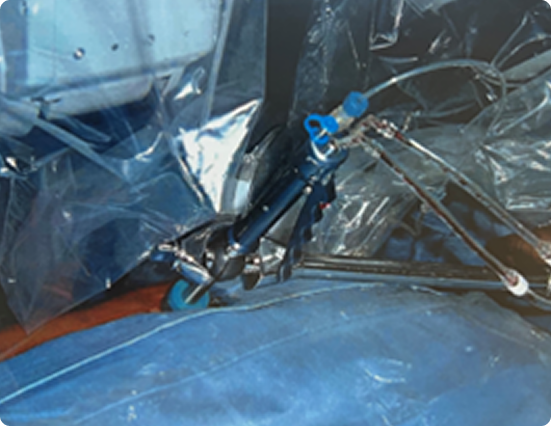
One of the most ambitious goals of the era was performing coronary bypass procedures on a beating heart, inside a closed Thoracic cavity!
Traditionally bypass surgery often required cardiopulmonary bypass, where blood circulation is diverted to a heart-lung machine. While effective, the procedure introduced additional complexity, embolic debris, and extended recovery times.
To perform surgery on a beating heart, surgeons needed a way to isolate and stabilize a small section of moving cardiac tissue while allowing the remainder of the heart to continue beating normally.
This challenge led to Intuitive Surgical’s early beating-heart stabilizer program.
After an initial development effort failed to produce a viable solution, Chris Julian was brought in to reboot the project.
Rather than simply improving the existing design, Chris rethought the architecture entirely.
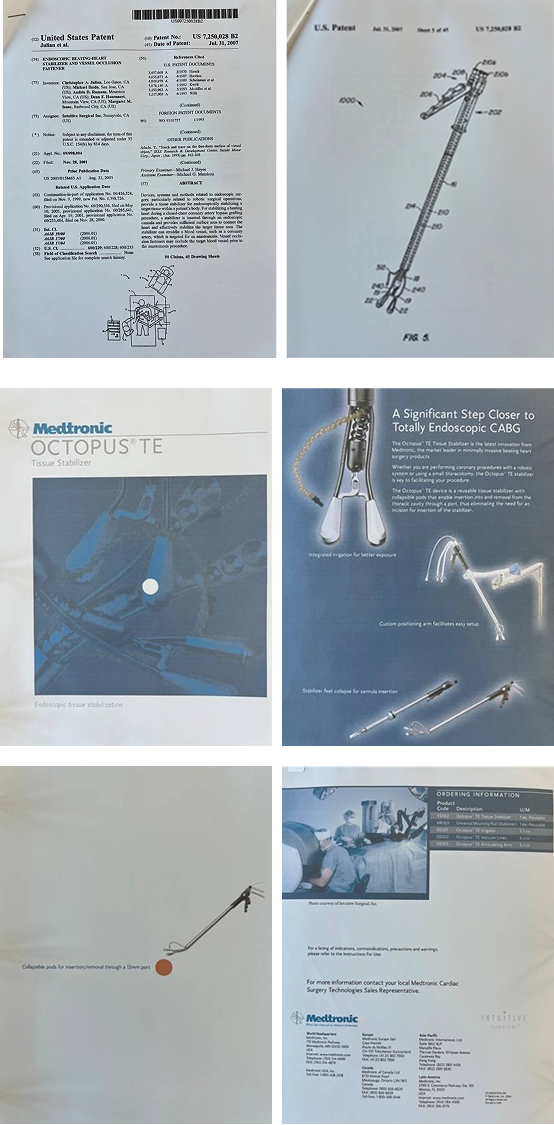
At the time, Medtronic’s Octopus stabilizer represented the industry benchmark. However, the system relied on open surgical access and was not optimized for robotic or endoscopic procedures.
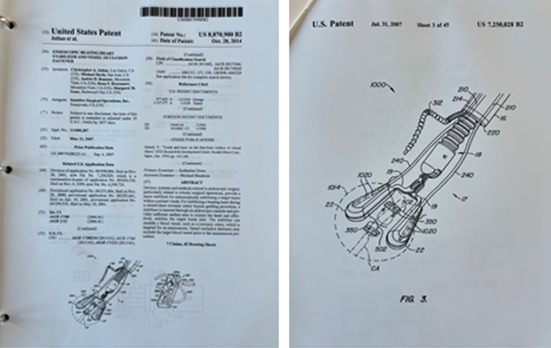
Chris developed a novel stabilization architecture featuring:
- A quick-action brake lever locking mechanism that allowed rapid positioning and fixation
- Flexible articulating support structures enabling precise placement through minimally invasive access points
- Pivoting stabilization feet designed to conform to cardiac anatomy
- Irrigation integration through a minimally invasive delivery path
- A system architecture optimized for totally endoscopic cardiac surgery
The resulting design significantly improved ease of positioning and stabilization while remaining compatible with robotic and minimally invasive surgical workflows.
Throughout development, Chris worked directly with internationally recognized cardiac surgeons in both Europe and the United States to evaluate concepts, prototypes, and clinical requirements.
These collaborations helped ensure the technology addressed real surgical challenges rather than engineering assumptions.
The stabilizer program ultimately became strategically significant for Intuitive Surgical.Because Medtronic controlled much of the intellectual property surrounding beating-heart stabilization, the architecture and concepts developed through this effort eventually helped support collaboration discussions between Intuitive Surgical and Medtronic.
The resulting relationship contributed to Intuitive's in house fully endoscopic Beating heart Robotic cases and the development of the Octopus TE (Totally Endoscopic) platform, representing one of the earliest dedicated stabilization systems for robotic cardiac surgery.
Perhaps most importantly, the work established a pathway for robotic coronary bypass surgery at a time when many believed the technical challenges were too difficult to overcome.
Today's Cardiac program was enabled thru Chris and his teammates-a direct result of the 2000 reboot of the Stabilizer and Cardiac Closed Chest beating heart program, and just in time, ahead of the company's refocus on Abdominal procedures.
The project exemplified a recurring theme throughout Chris’s career:
When others saw a failed project, Chris saw an opportunity to rethink the problem.
By challenging assumptions and rebuilding the architecture from first principles, he transformed an unsuccessful development effort into a technology platform that helped shape the future of robotic cardiac surgery.
Ridge Medical Innovation, LLC
Chris Julian
Experience spanning surgical robotics, implantable devices, manufacturing systems, and advanced medical technologies.



Legal Notice: Intellectual Property & Confidentiality: Every reasonable effort has been made to ensure that the content of this website complies with applicable confidentiality obligations and intellectual property rights.Technical descriptions emphasize engineering methodology, innovation strategy, publicly available information, personal experience, and information I am authorized to disclose, rather than proprietary implementationdetails or trade secrets. Images are properly licensed, AI-generated, or artistic recreations used solely for illustrative purposes. No confidential or trade secret information is intentionally included. All Case Studies arebased on publicly available information and personal professional experience. Confidential, proprietary, and trade secret information has been intentionally omitted.